
GUIDE II OF III · THE CONVERSATIONAL SELLING PLAYBOOK
Selling on iMessage: The Channel Shoppers Actually Answer
Why shoppers open and answer iMessage, what you can send that SMS can't, and why this untapped channel is only now opening up to every store. Ends with 7 rules for selling on iMessage.
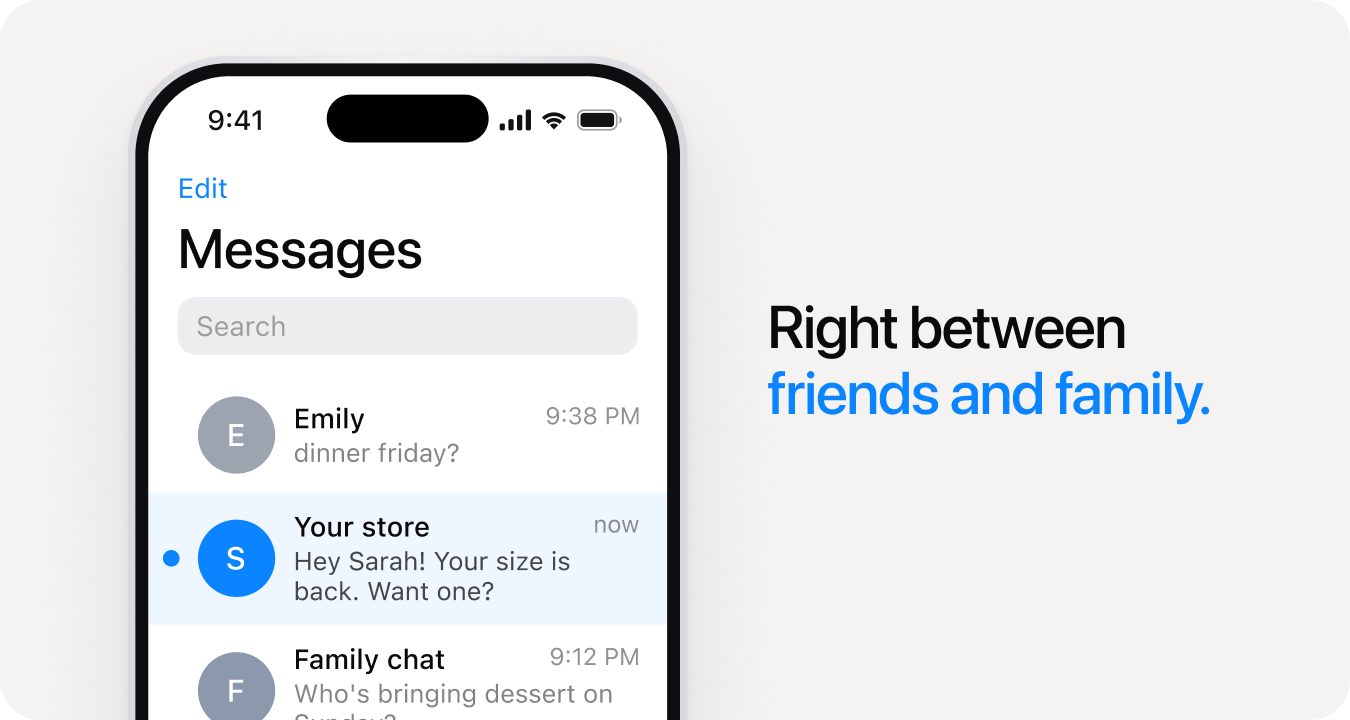
You answer texts from friends and family within minutes. Texts from brands? Most get ignored. This guide shows how your store can get answered like a friend.
Around 160 million people in the US use an iPhone, more than half of all smartphone users, and every one of them has iMessage built in. Yet almost no store sells there. It's one of the last untapped channels in e-commerce, and it's only now opening up to stores like yours.
1. Blue Bubbles
iMessage is the blue-bubble chat built into every iPhone. It's where people text their family and friends. So when a store's message lands there, right between friends and family, it gets read like a message from someone they know.
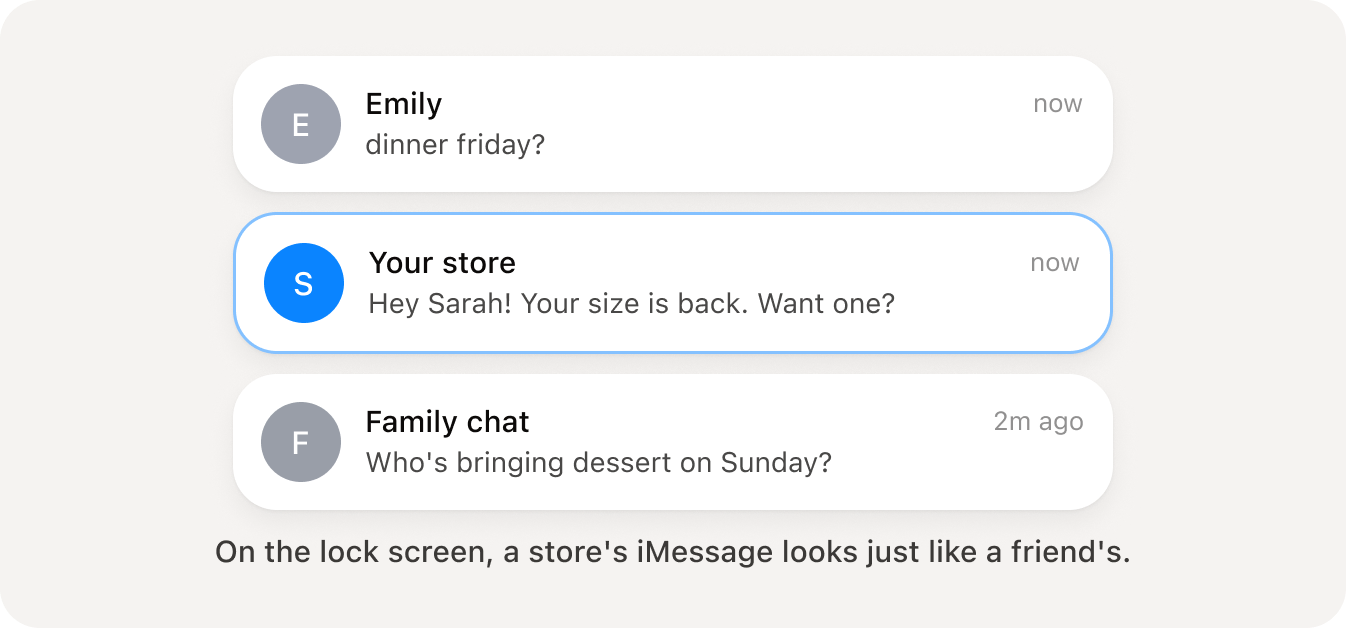
For shoppers without an iPhone, the same conversation can continue over RCS or SMS.
2. Why Shoppers Open It and Answer
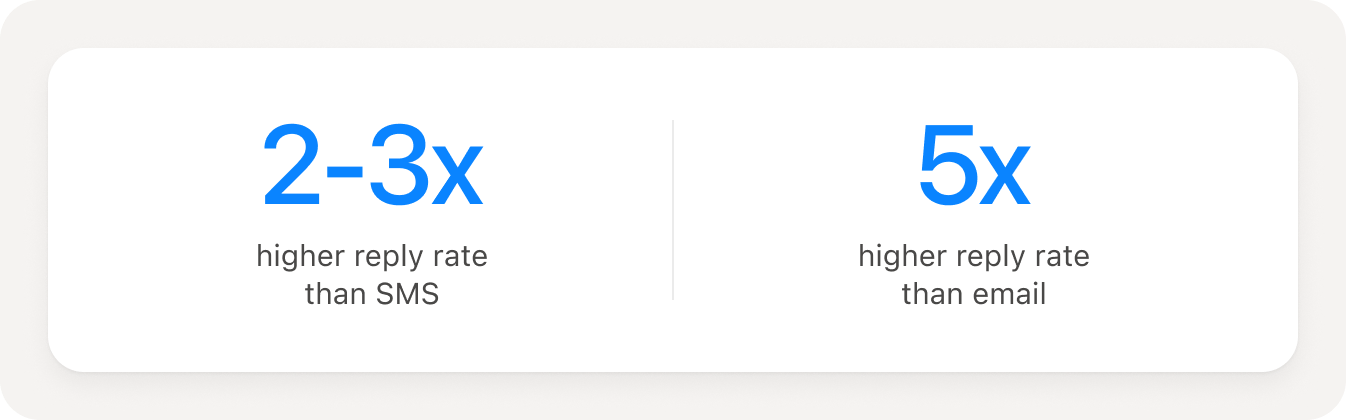
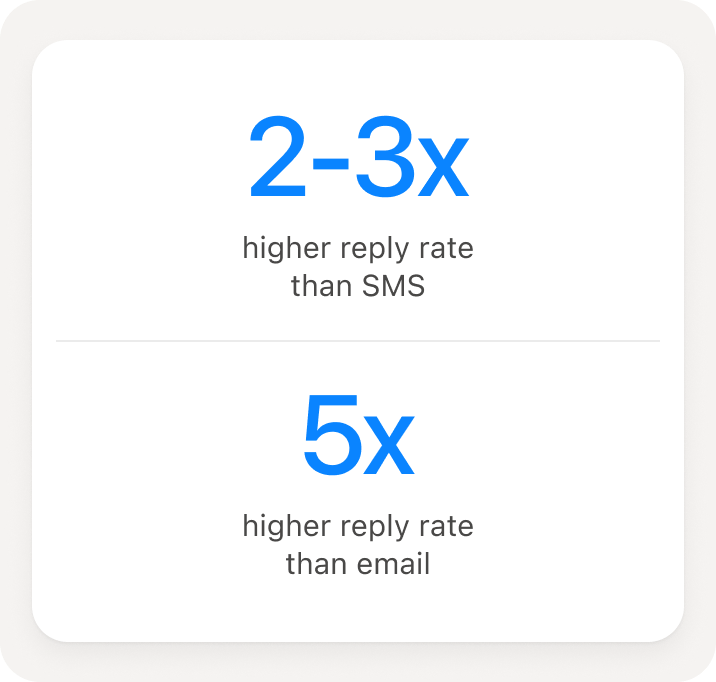
People don't check iMessage. They live in it. That's why iMessage gets a reply rate about 2 to 3x higher than SMS, and around 5x higher than email.
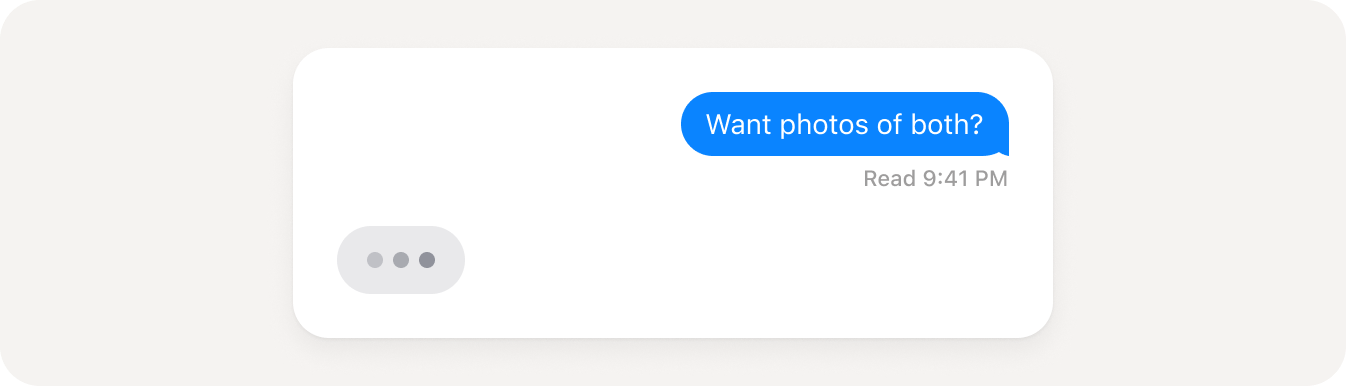
It also feels like a conversation, because it is one. You see "Read" under your message, then three dots while she types. That back-and-forth is exactly what selling 1:1 needs.
3. What You Can Send
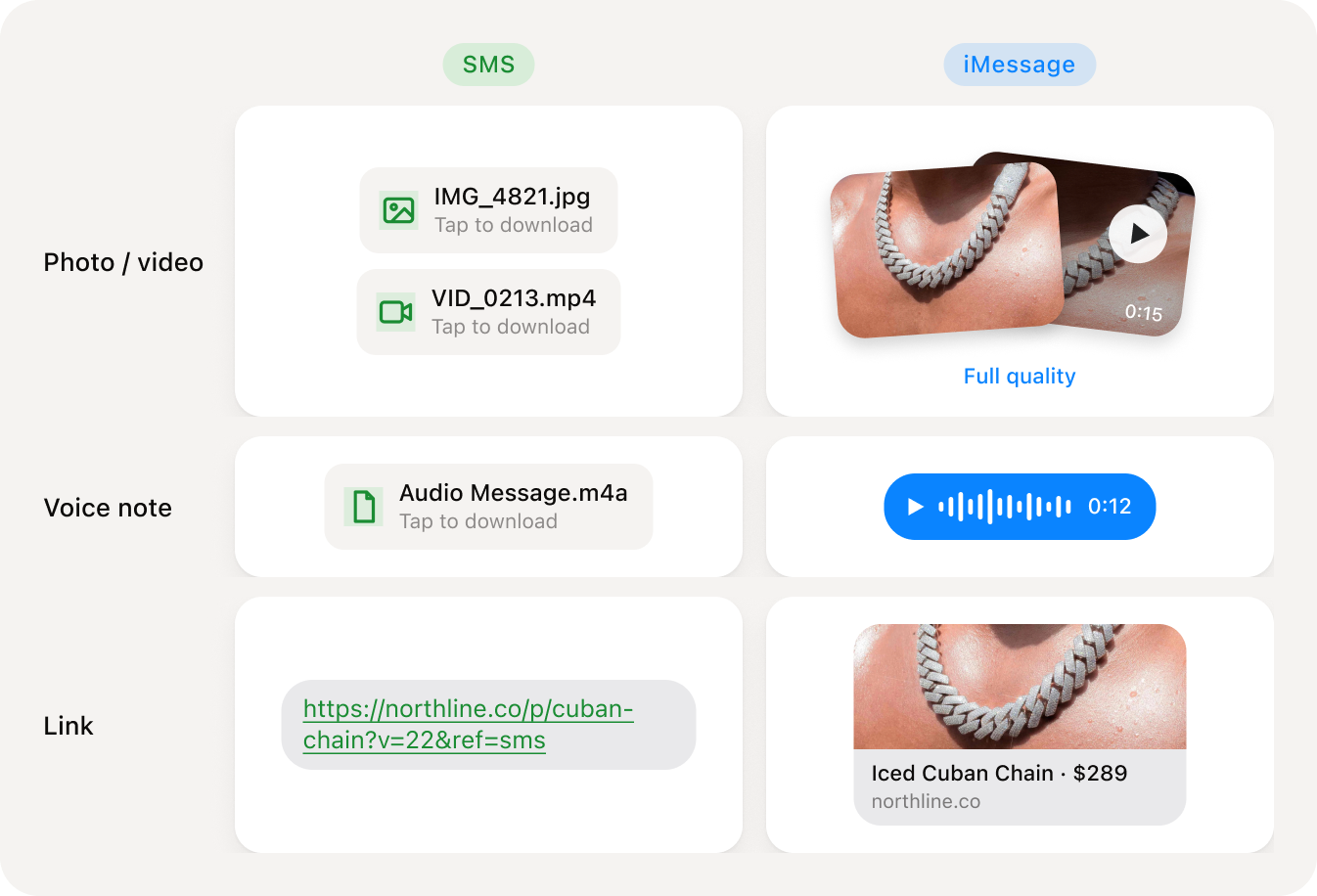
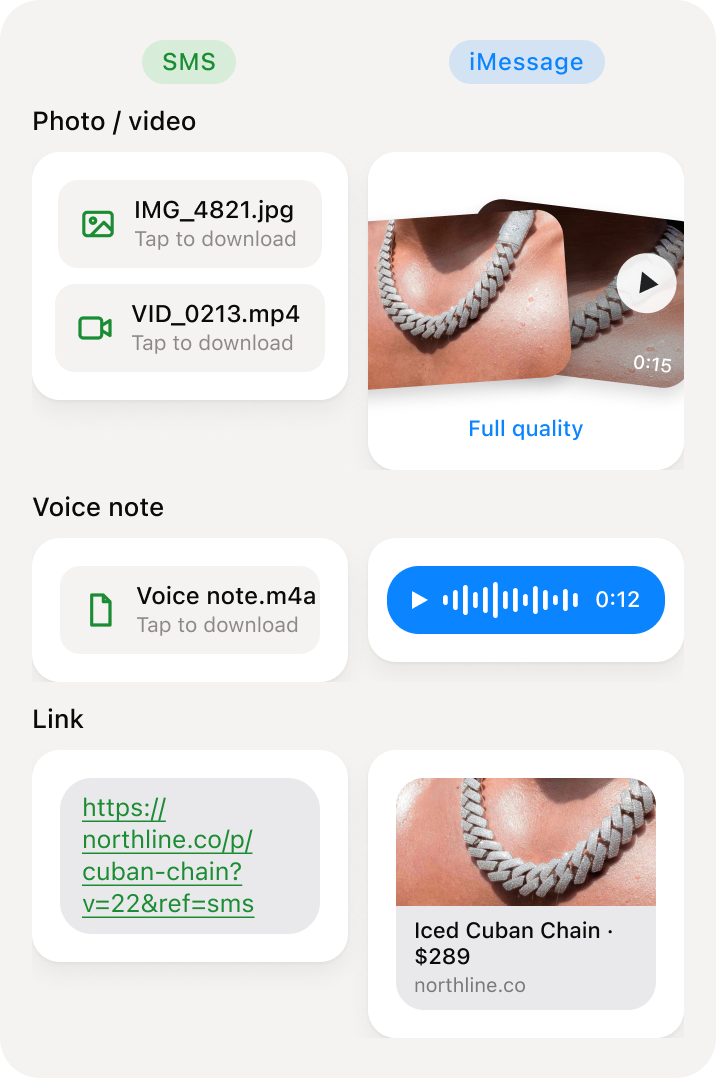
Selling is easier when you can show the product. On iMessage you can send sharp photos and videos, link previews with the product image and price, voice notes that play like a normal voice message, and reactions, like a heart on "omg I love it".
Over SMS, the same things break. Photos, videos and voice notes arrive as files to download, and links show up as a bare web address.
4. The Rules, Plainly
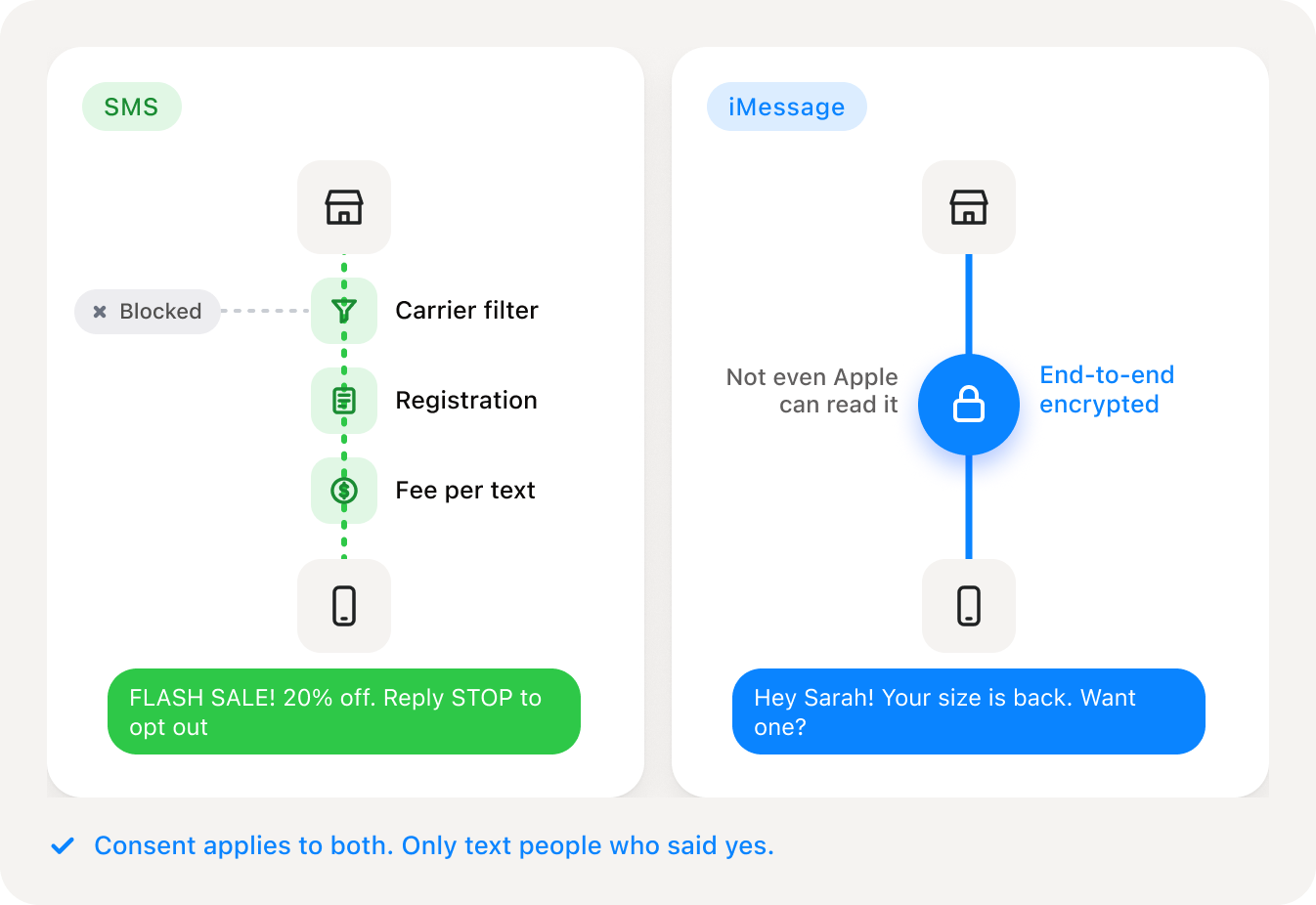
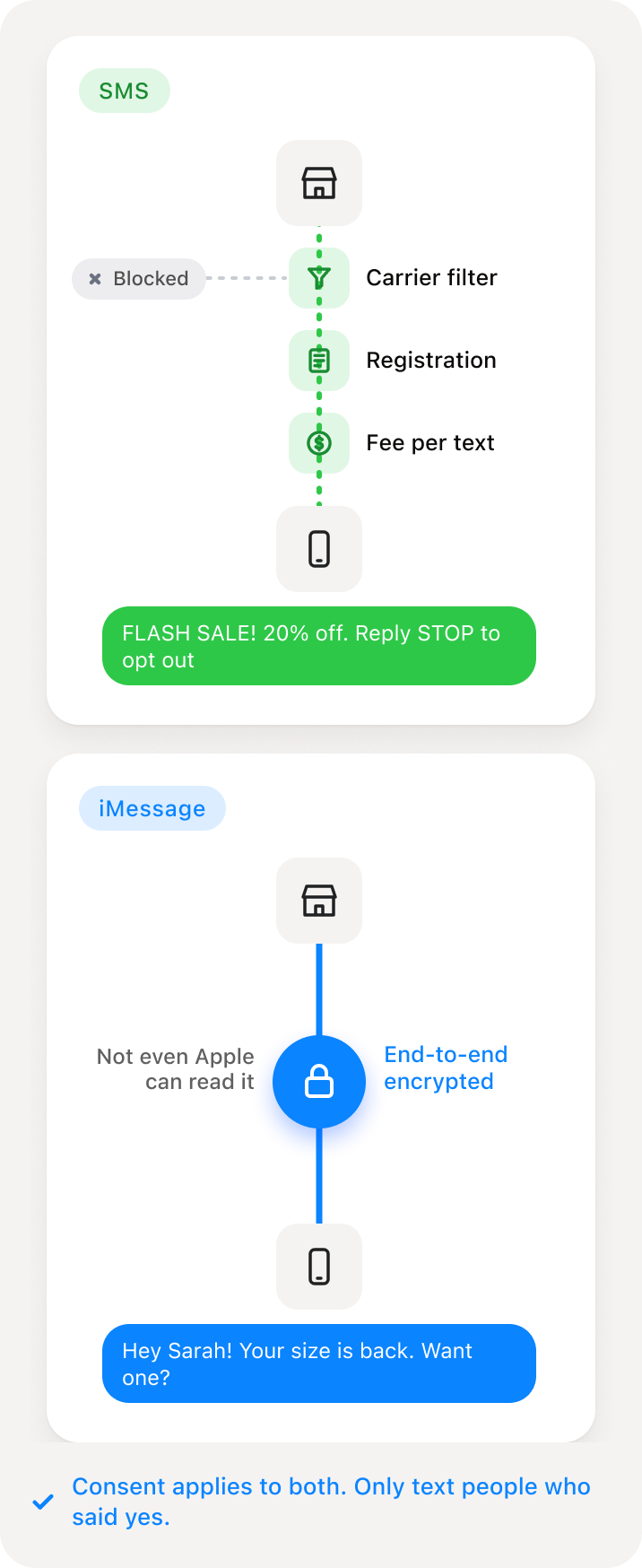
When a brand sends an SMS, it goes through phone companies like AT&T, Verizon and T-Mobile. They make brands fill in registration forms before sending, they scan every message, and they block texts that look like spam. That's also why every promo ends with "Reply STOP". Some of your texts never reach the shopper at all.
iMessage works differently. It travels over the internet, end-to-end encrypted between Apple devices, so not even Apple can read the messages. There's no carrier filter in the middle and no registration form to fill in. Your message arrives looking like a message, not a promo.
One rule doesn't change, and that's consent. Only text shoppers who said yes, and stop the moment they ask. That's how Caesar works too.

Lukas Lainsalu
Co-founder of Caesar
Set Up Once. It Sells on iMessage for You.
Caesar is an AI sales agent that texts your shoppers 1:1 over iMessage and sells to them 24/7. Book a call and see it on your store.
5. The Cost Difference
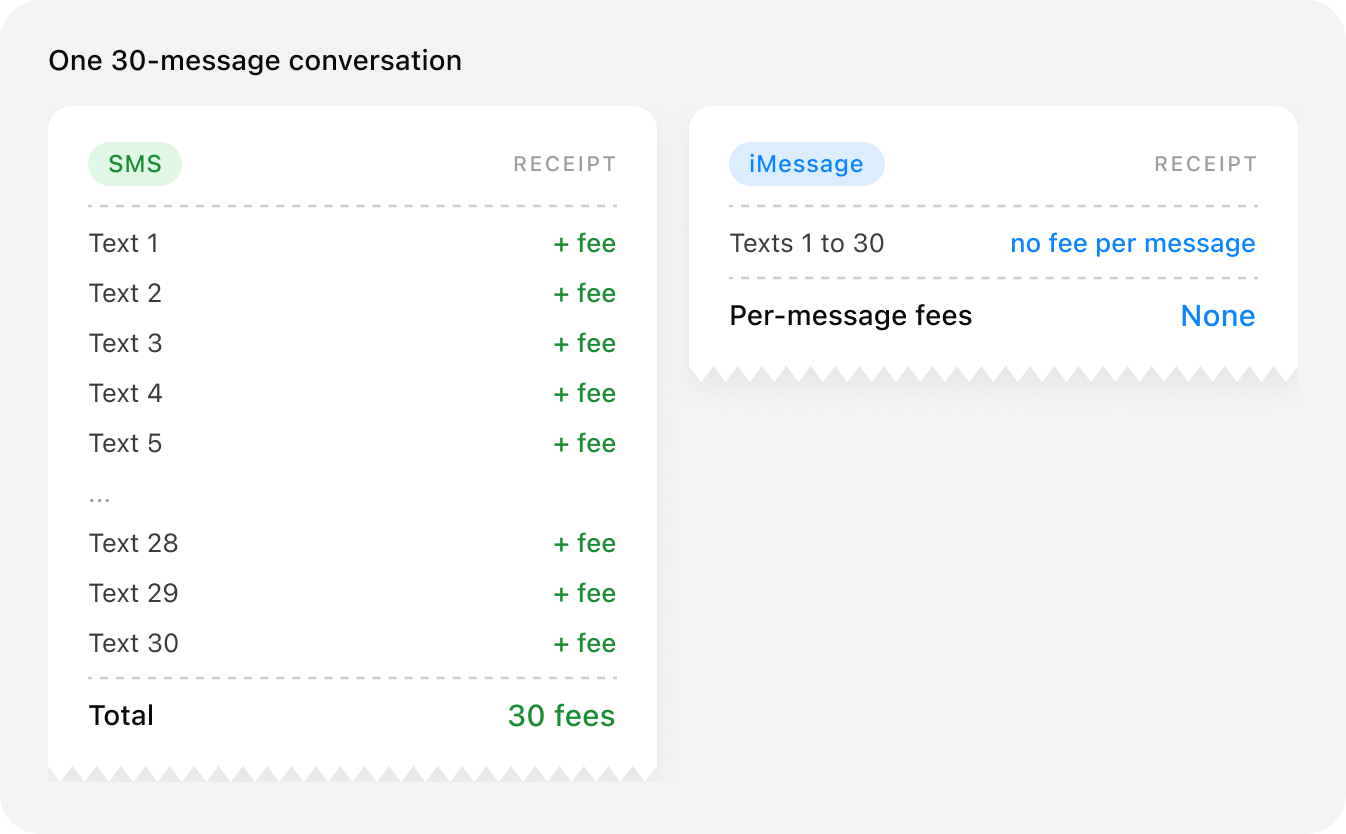
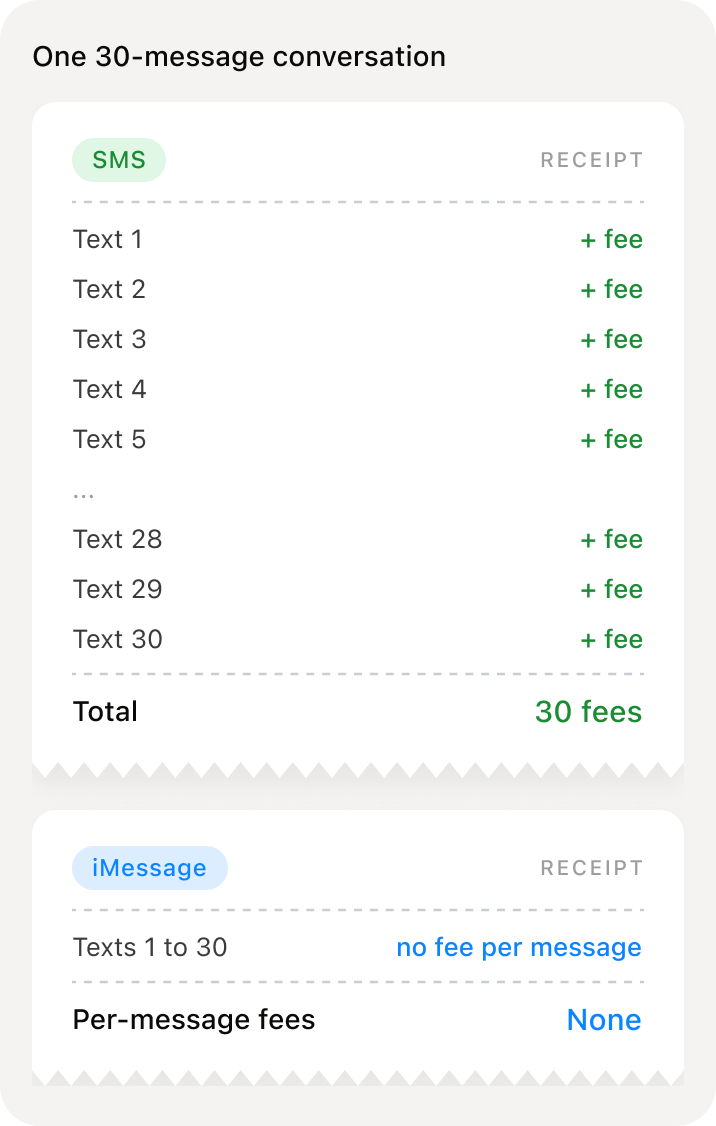
SMS charges for every message. A blast to your list is one charge per person. A real back-and-forth, the kind that sells, is a charge for every text, so long conversations get expensive fast.
iMessage has no per-message fee. A 30-message conversation doesn't cost ten times more than a 3-message one. That's what makes long, patient selling conversations possible.
6. An Untapped Channel, Just Opening Up
If iMessage works this well, why isn't every store on it?
Because until recently, business conversations on iMessage took serious money and engineering. Only big companies with big budgets, usually selling high-ticket products, could make the numbers work.
Caesar changed that. We cut the cost with new technology, so a store selling $30 products can now sell on iMessage the same way a $3,000 brand can.
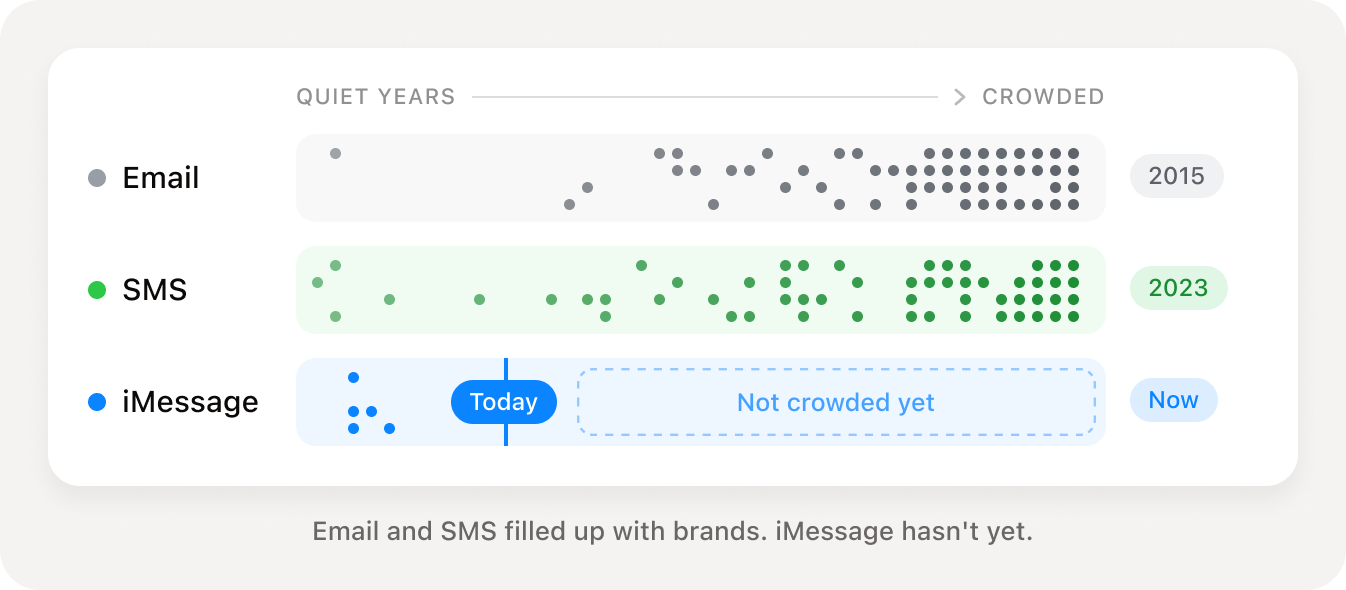
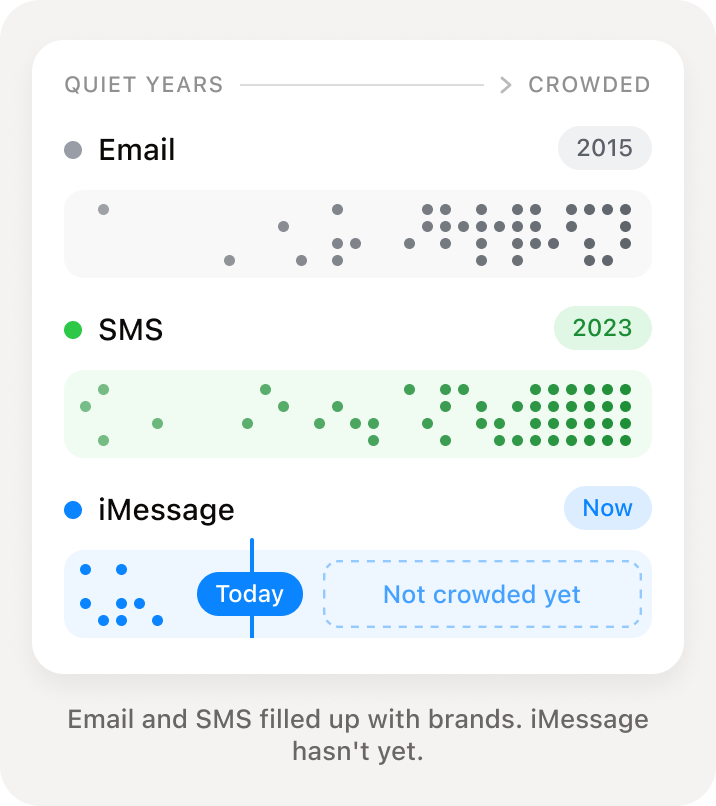
That makes right now the early window. Email had its quiet years, and so did SMS, before every brand piled in. iMessage is in its quiet years today. The stores that start now reach shoppers in an inbox that isn't full of brands yet.
7. Steal This: 7 Rules for Selling on iMessage
These work whether you text shoppers yourself or let software do it. Every example uses a made-up store.
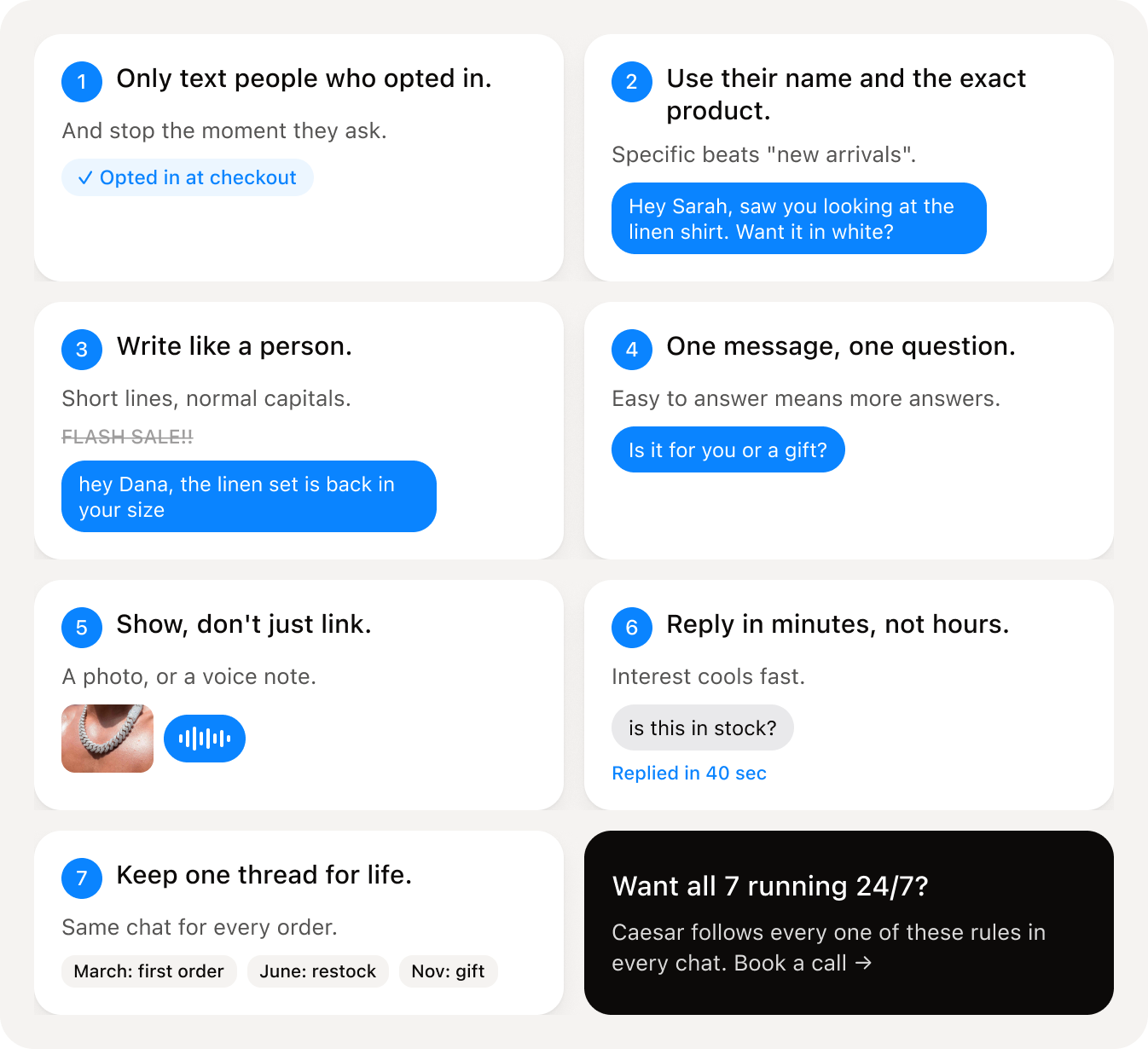
Following these rules for ten customers is easy. Following them for ten thousand, at 11pm on a Sunday, is a full-time job. That's what Guide III is about.
Lukas Lainsalu
Co-founder of Caesar
Get Your Store Selling on iMessage
Book a call and we'll walk you through it.
Lukas Lainsalu
Co-founder of Caesar