
GUIDE I OF III · THE CONVERSATIONAL SELLING PLAYBOOK
From Blasts to Conversations
Mass texts and emails stopped landing years ago, and high-ticket brands never relied on them. Here's how those brands sell instead, and why the rest of e-commerce never could.
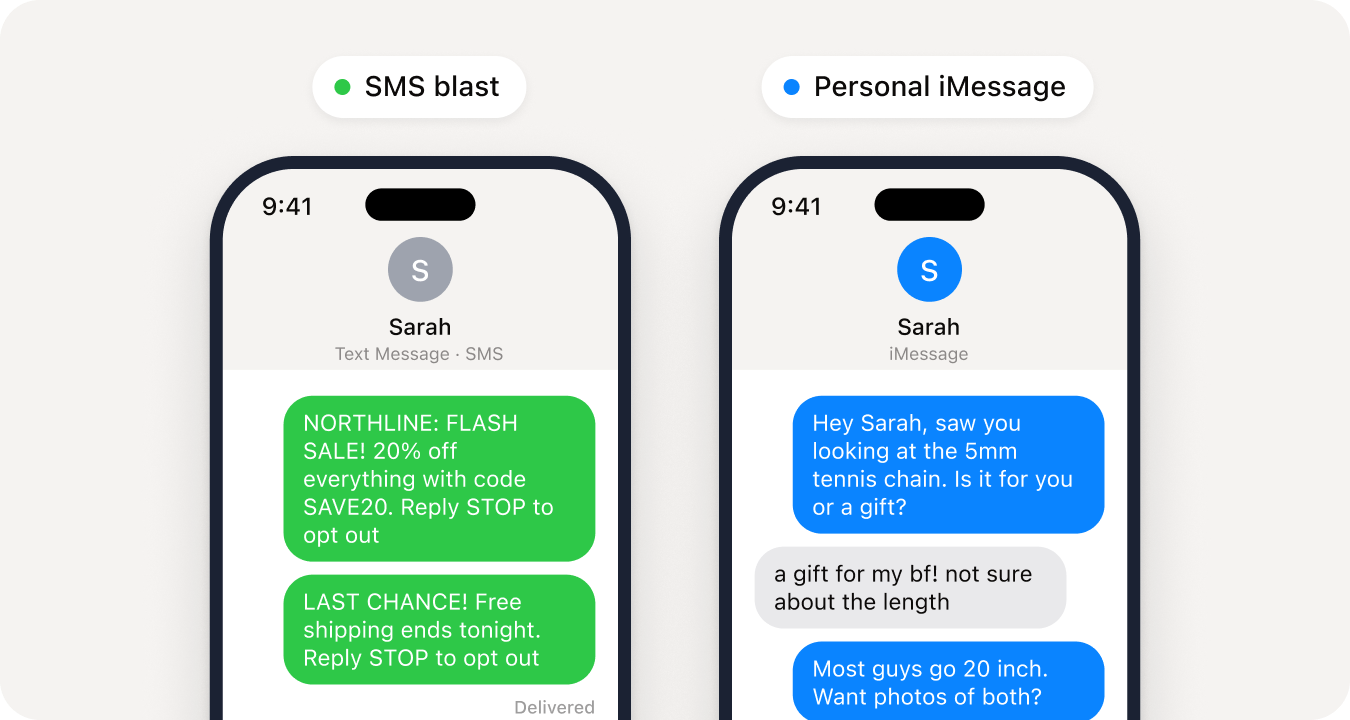
Count the texts brands sent you this week. Most say the same thing: a discount, a link, and "Reply STOP to opt out." You bought from none.
Now picture buying a ring in a jewelry store. Someone greets you, asks who it's for, shows you three options in your budget, and texts you a week later to ask if you've decided.
Most online stores do the first. The best sellers in the world have always done the second. This guide is about the gap between the two.
1. The Crowded Inbox
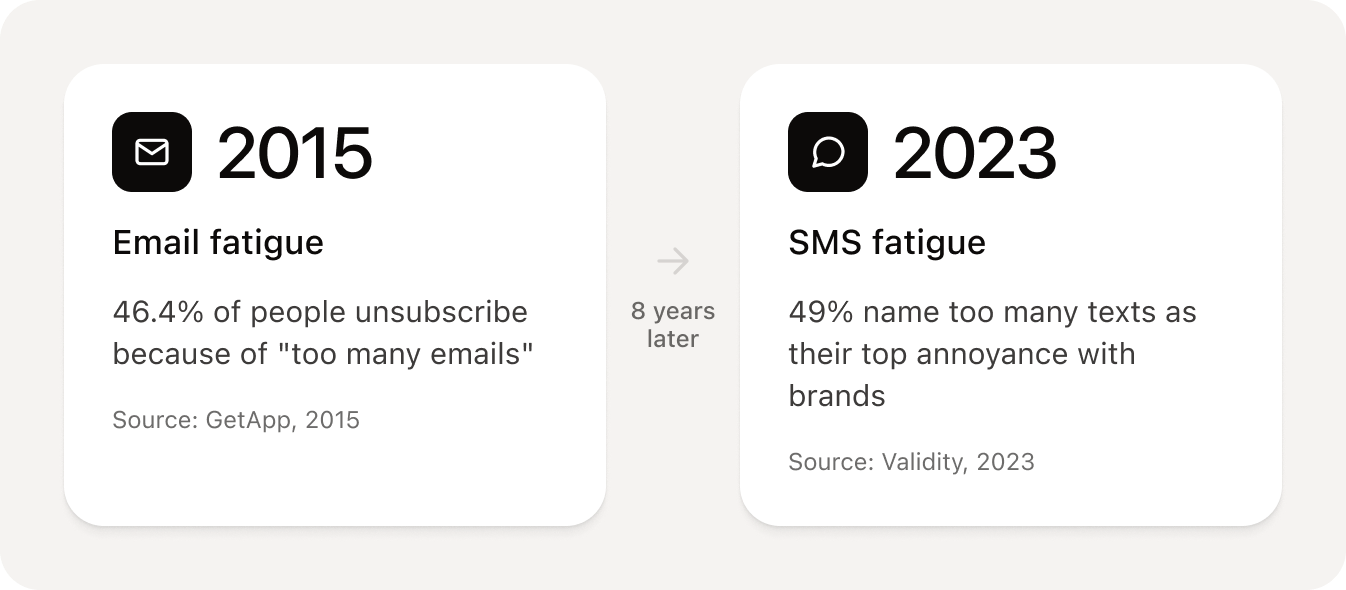
Email worked because it was cheap and easy. Then every store used it. By 2015, "too many emails" was the top reason people unsubscribed from newsletters.
So brands moved to SMS marketing, and the same thing happened. By 2023, getting too many texts was people's number one complaint about brands.
Consent rules followed the volume, and with them came "Reply STOP" on every brand text. The rules protect people, which is fine. But that footer tells the shopper "this went to everyone" before she reads a single word, and her brain files it with every other promo.
The tools aren't the problem. The format is.
2. How High-Ticket Brands Sell
Online jewelry brands, luxury watches, mattresses, e-bikes, designer furniture, home gym equipment. Each sells something expensive online, and the ones that sell best put a real person in front of the buyer, in chat, on the phone or by text.

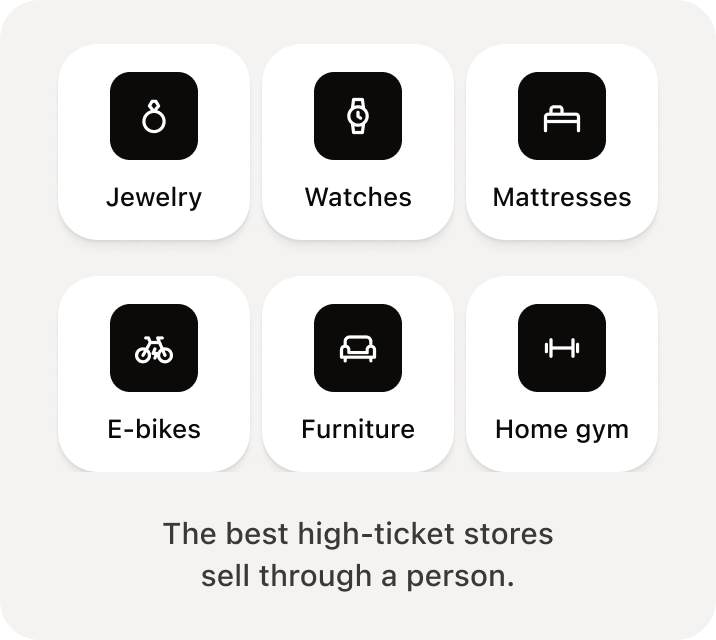
A $4,000 buyer isn't short on information. He's short on confidence. Is this the right one? Will she love it? A good salesperson asks before pitching, finds the one worry that's stopping the sale, answers it, and follows up when the buyer goes quiet.
These stores pay salespeople a commission because it pays off. When a real person answers the buyer's questions, more buyers say yes, and they spend more.
3. Why a $30 Product Never Gets a Salesperson
Say a salesperson earns 10% of every sale. A $3,000 sale pays them $300. A $30 sale pays them $3.
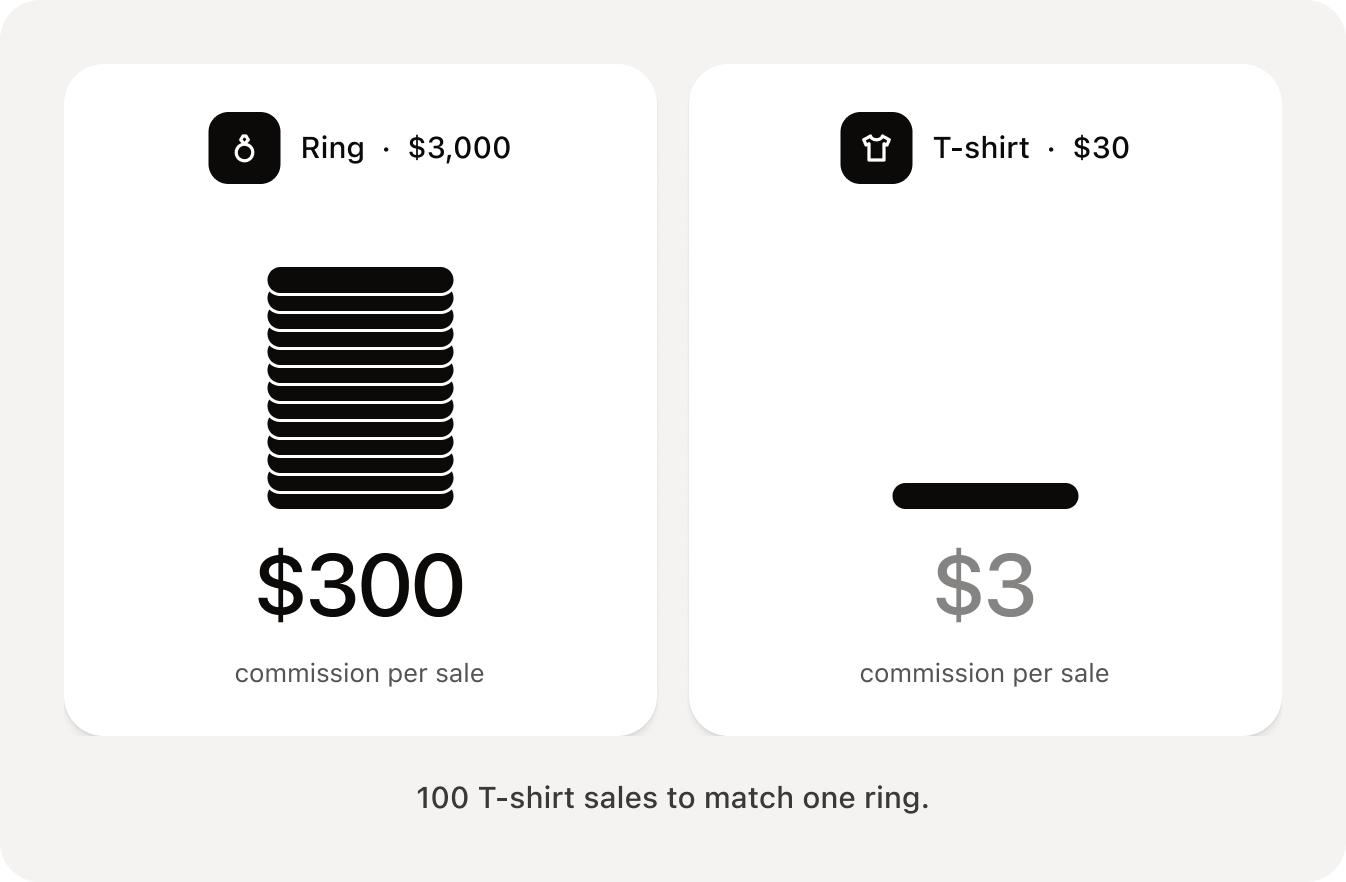
Nobody takes that job, so lower-priced stores automate with welcome emails, cart flows and promo texts. It makes money. But their shoppers still have questions. Does it run small? Will it arrive by Friday? Any one of them can kill a sale, and nobody's there to answer.
And $30 is rarely the real number. A customer who comes back eight times is worth $240.
4. Why Even Big Brands Skip Sales Teams
Plenty of high-ticket stores skip salespeople too. Hiring takes months and training never ends. Good reps leave the moment someone offers a better commission. And shoppers buy at 11pm on a Sunday, so somebody has to be awake.
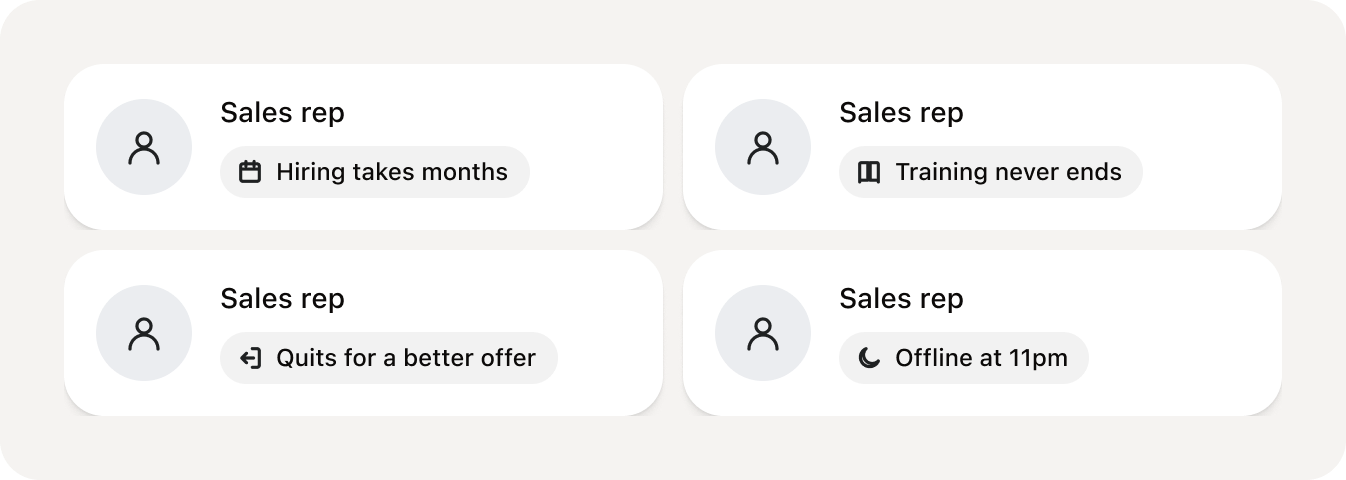
So most stores send the blast because it's easy. The way of selling that works best is the one almost nobody uses.

Lukas Lainsalu
Co-founder of Caesar
Imagine a Salesperson on Every Chat, Day and Night. What Would It Make You?
Caesar is an AI sales agent that texts every shopper 1:1 over iMessage and sells to them 24/7, including 11pm on a Sunday. Book a call and see what it would make your store.
5. Template vs Conversation
Same shopper, same abandoned cart. She looked at a gold tennis chain last night and left without buying.
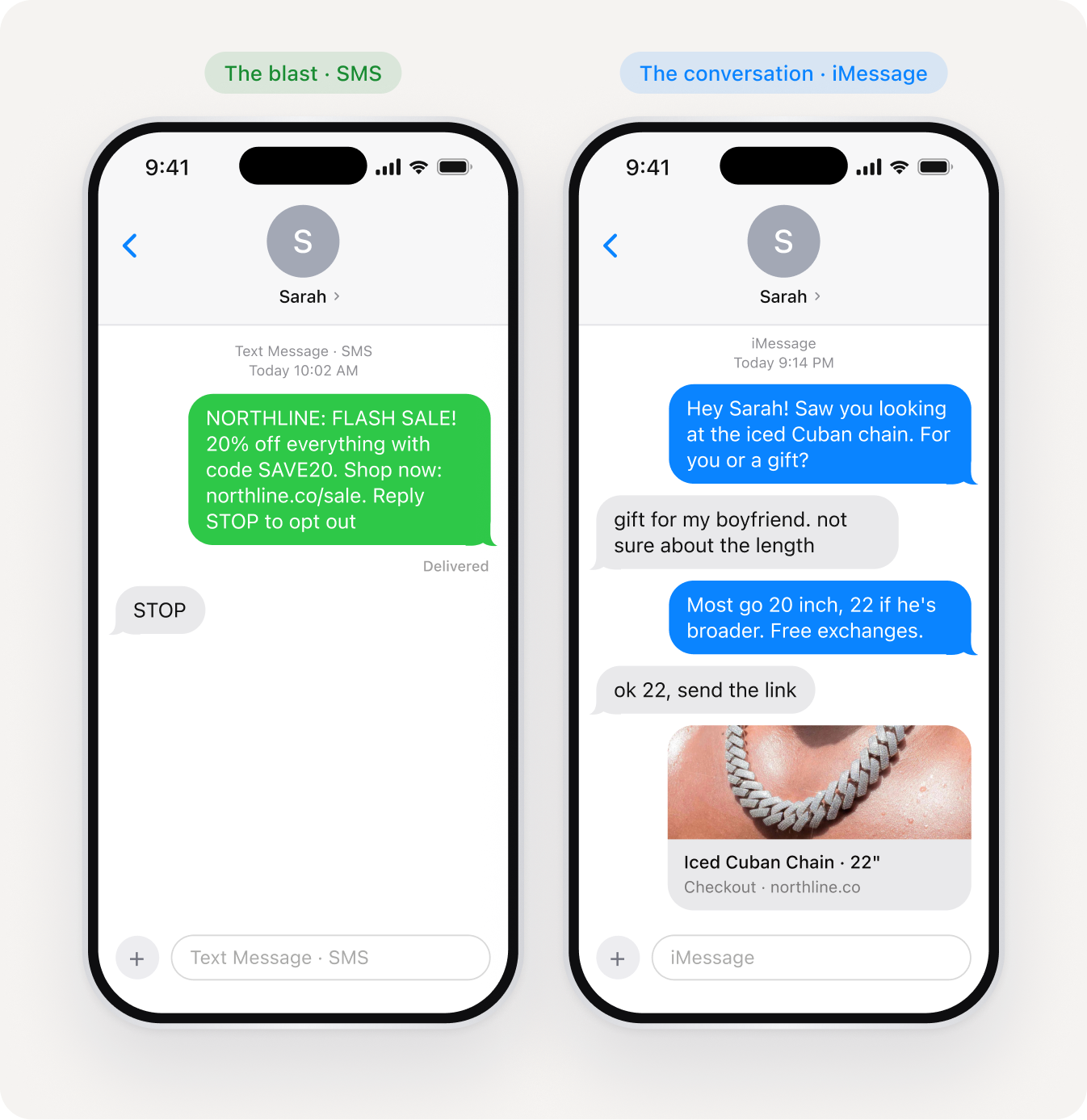
She ignores the first. The second ends in an order, because it answers the one question that was stopping her.
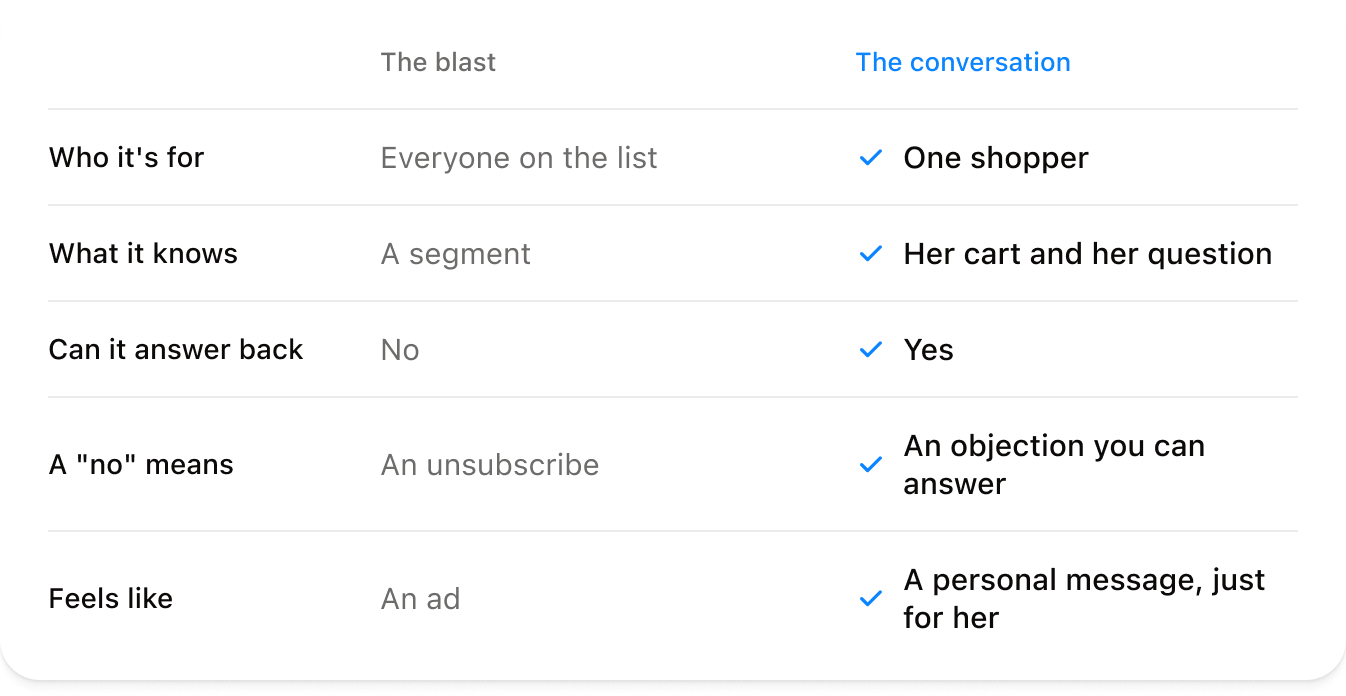
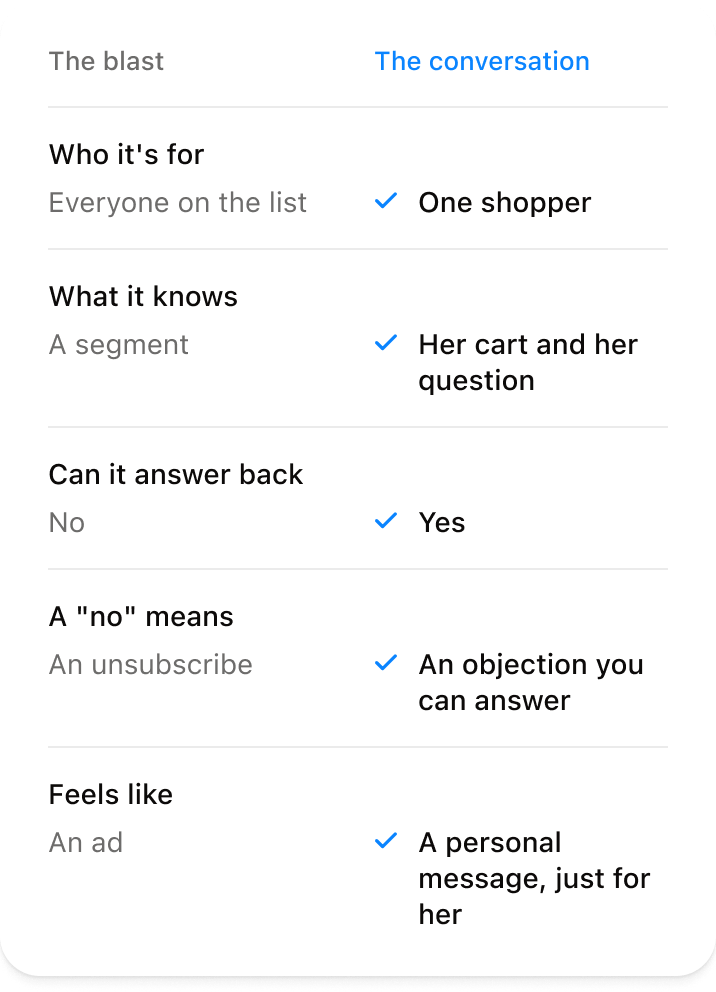
That's conversational selling: one shopper at a time, in a real back-and-forth.
6. What Changes When Shoppers Feel Talked To
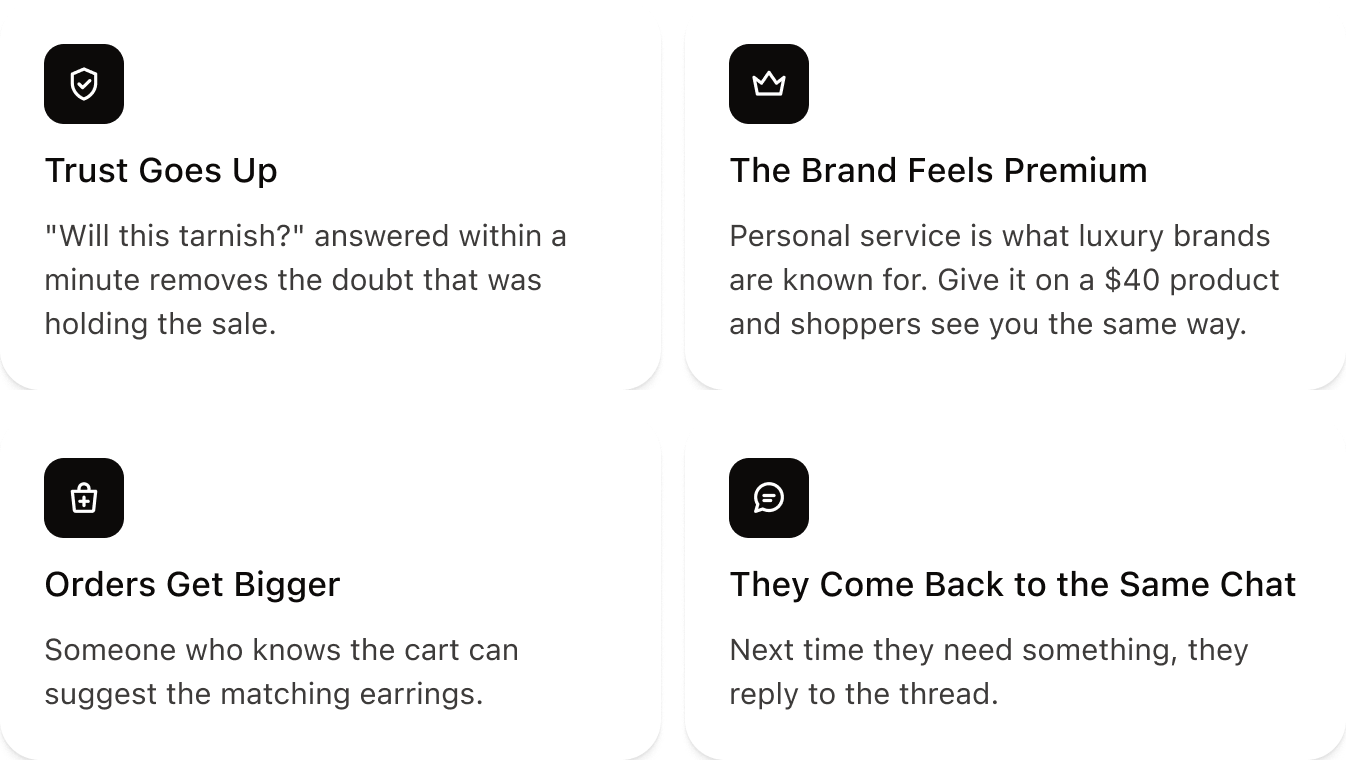
7. Steal This: First Messages That Get Replies
You can try every one of these yourself, starting today. Pick a few customers, message them directly, and see who writes back. Every example uses a made-up store, so change the details to fit yours.
A first message has one job, and it's getting a reply, not a sale. Use their name and the exact product, ask one easy question, and save the discount for later.
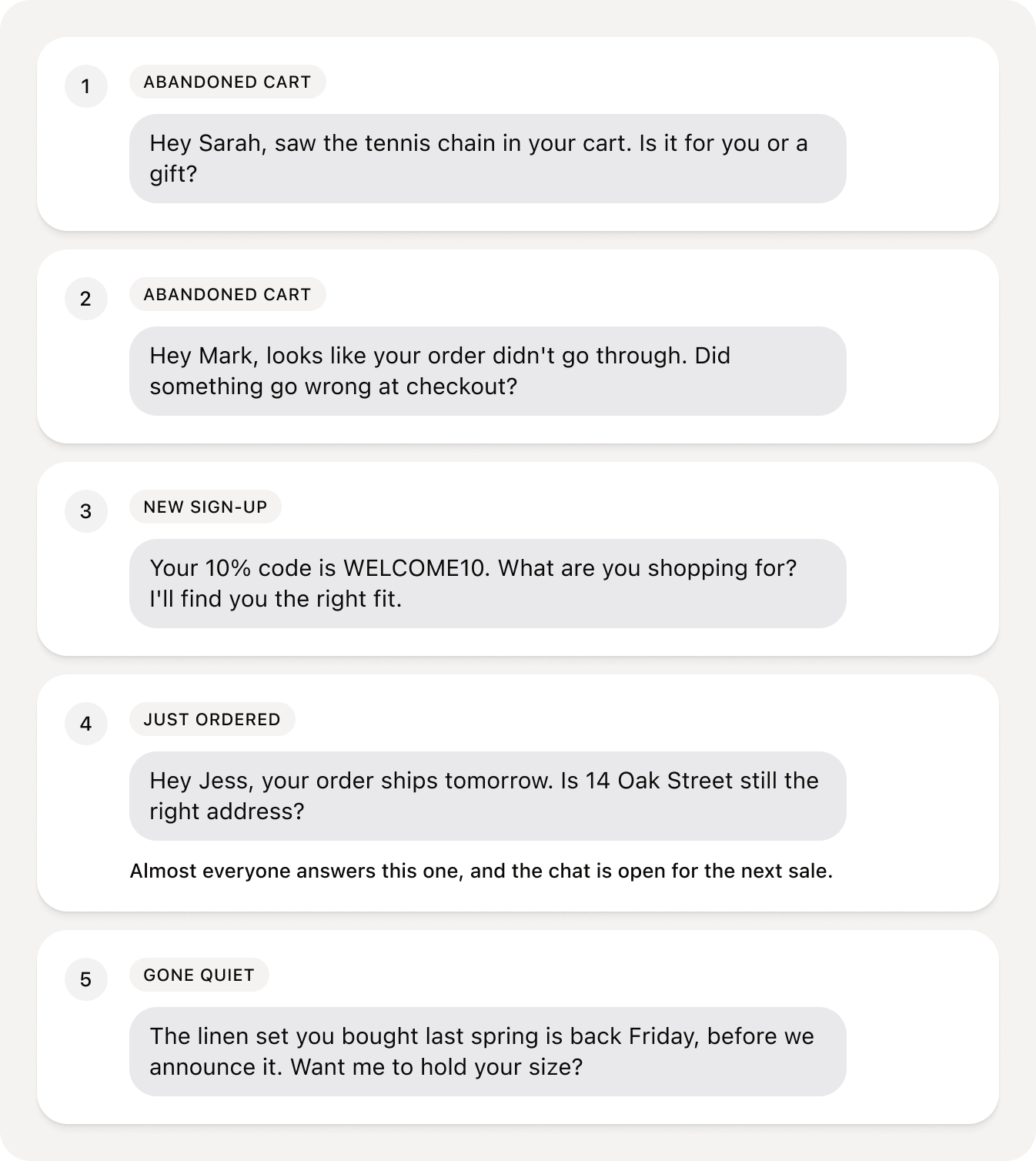
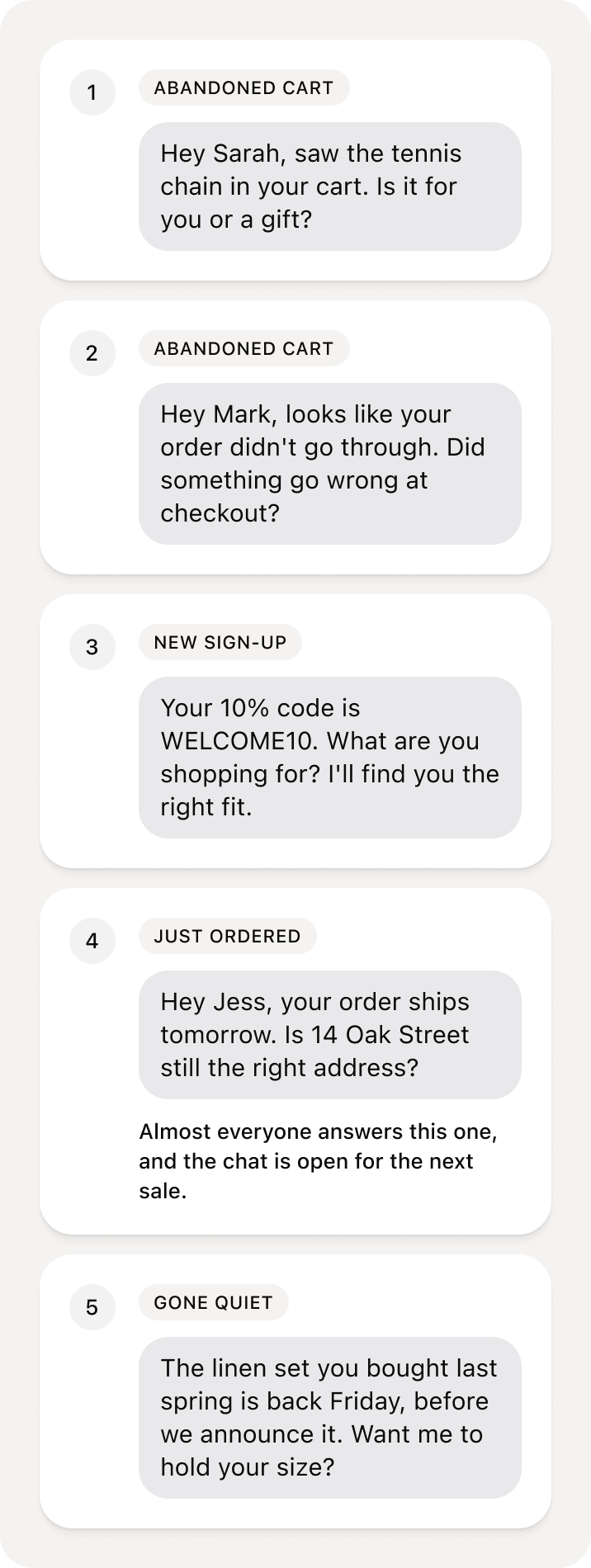
If they don't reply, follow up tomorrow in the same chat. Most sales aren't lost to a no. They're lost to a silence nobody followed up on.
8. One Founder Can't Text Every Customer
Early on, founders answer every DM themselves, and customers love it. Then 10 orders a day becomes 300, and giving every customer that personal attention becomes impossible.
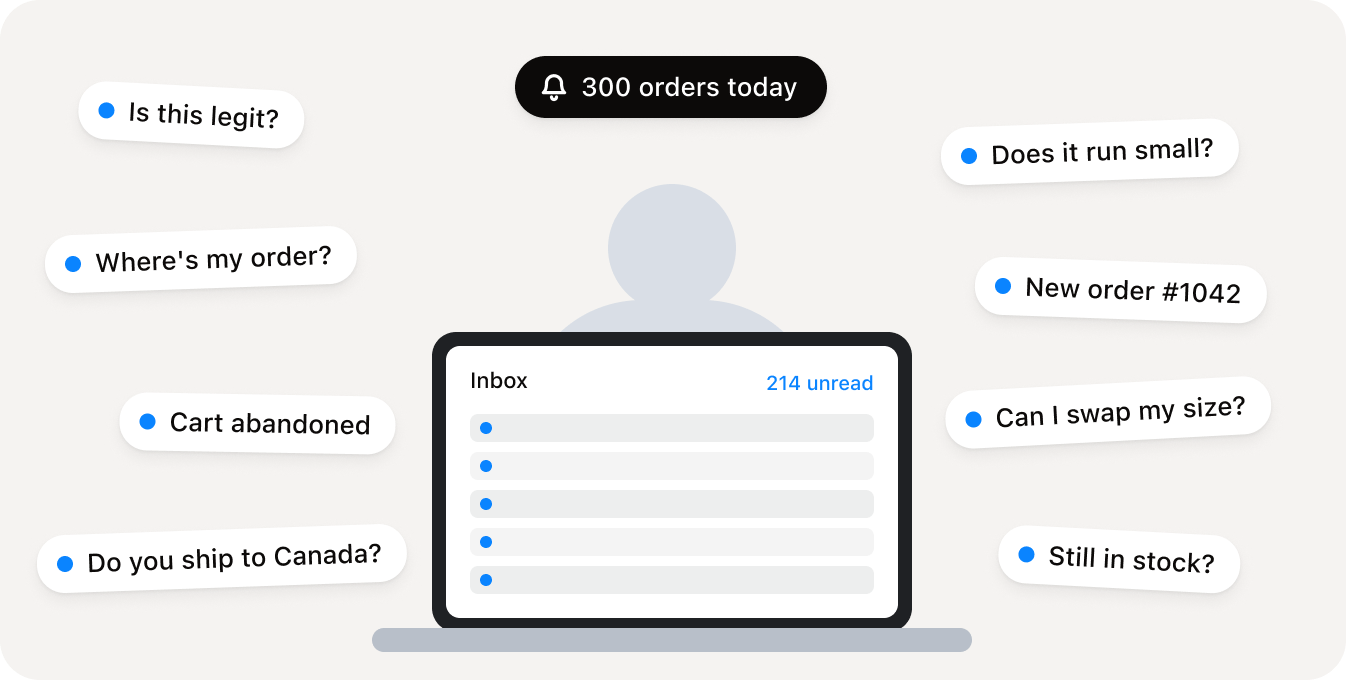
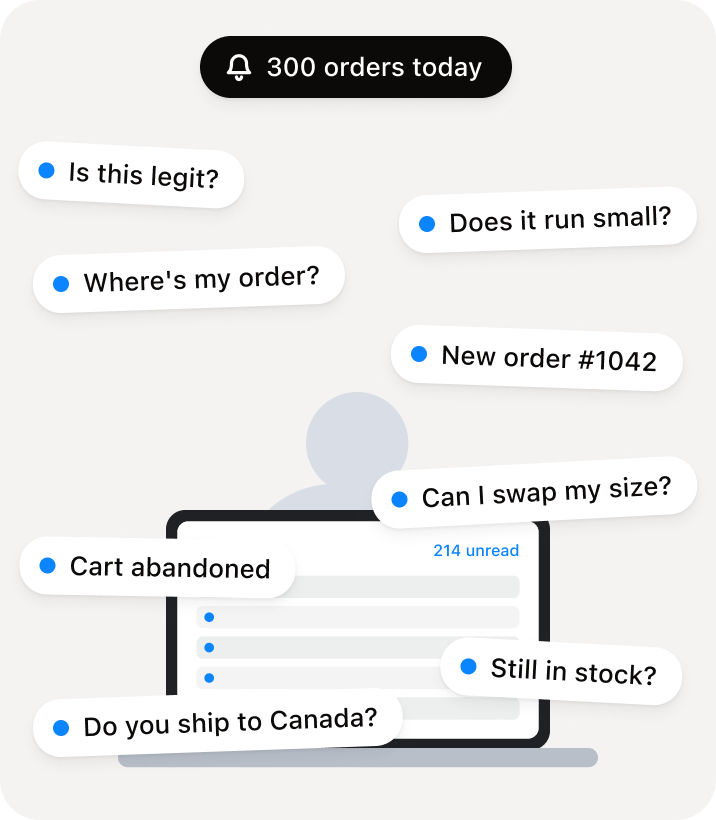
At that point there are two ways to keep selling 1:1. You can hire people to do it, and deal with months of hiring, endless training and reps who leave for a better offer. Or you can automate it.
Most automation, like email flows and SMS tools, still sends the same template to everyone. That isn't selling 1:1. AI chatbots can reply to each shopper, but they don't know how to sell. They answer questions, but they never ask what the shopper needs, handle a doubt or close the sale. And they hallucinate, which is a polite way of saying they make things up. They quote the wrong price, promise a delivery date you can't hit, or hand out a discount you never offered. One wrong answer costs more than the sale it was trying to save.
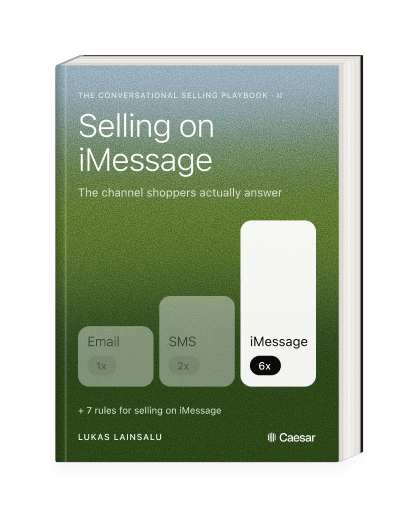
What works is an AI salesperson built only for selling. It knows your store, sticks to what's true, and sells like your best rep would. It also needs a channel shoppers actually read, one that looks like a message from a friend. Guide II covers the channel. Guide III covers the salesperson.
Lukas Lainsalu
Co-founder of Caesar
See What Conversational Selling Would Make Your Store
Book a call and we'll walk you through it.
Lukas Lainsalu
Co-founder of Caesar