Most outbound programs still assume email is the default. It is cheap, it scales, and every tool supports it. But the economics changed: open rates are self-reported, filters are aggressive, and buyers have trained themselves to ignore anything that looks like a broadcast.
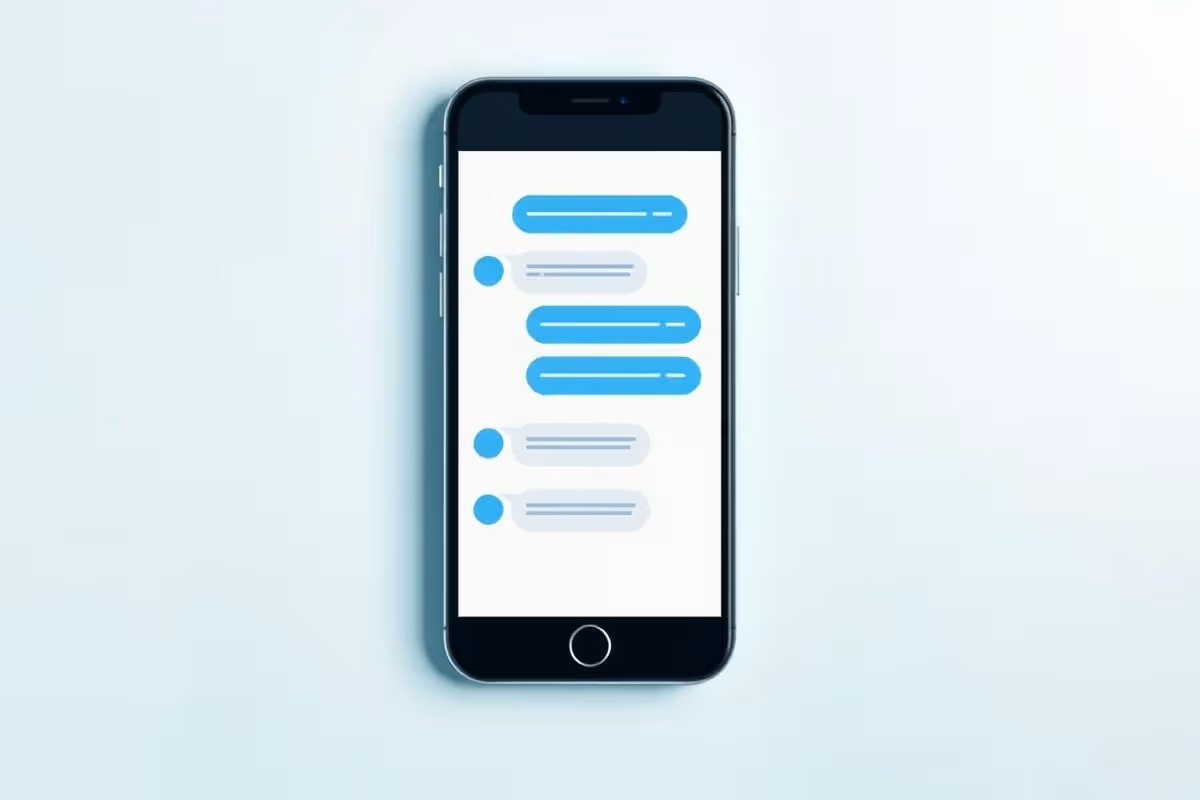
Messaging flipped that. A message that lands in iMessage sits next to family, friends, and delivery updates. It gets read within minutes, and when it reads like a person wrote it, it gets answered.
- Messaging is read in minutes, email is processed in days.
- The winning setup is not one channel, it is iMessage first with automatic fallbacks.
- Short, single-question openers beat formatted marketing templates.
The attention gap between inbox and thread
Email is a queue people process. Messaging is a conversation people participate in. That difference changes everything about how a sales agent should behave: no subject line, no signature block, no three-paragraph pitch.
In practice, teams moving first-touch outreach from email to iMessage see replies arrive in minutes rather than days, and those replies are far more likely to contain a real objection you can work with.
- Messages are read in the same surface people use with people they know.
- Short, direct copy outperforms formatted marketing templates.
- A reply is a conversation start, not a lead-scoring event.
If the opener would look out of place next to a text from a friend, it is too long.
Why fallbacks matter more than the channel itself
Not every contact is reachable on iMessage. The winning setup is not 'pick a channel', it is 'try the best channel first, then fall back automatically'. iSend attempts iMessage, then moves to WhatsApp, RCS, Telegram, or SMS depending on what the contact supports.
The customer never notices the routing. They see one message from one sender, in the app they already use.
What good first messages look like
The best-performing openers do three things: they reference a real signal, they stay under two sentences, and they ask a question that is easy to answer. Anything longer reads like marketing and gets ignored.
- Reference the trigger: a cart, a demo request, a renewal date.
- Keep it to one idea and one question.
- Never open with a discount, save it for the objection.
Frequently asked questions
What if the contact is not on iMessage?
iSend falls back automatically to WhatsApp, RCS, Telegram, or SMS based on what the number supports. The customer sees one sender in one thread.
Does this replace email entirely?
No. Email still works for newsletters and receipts. Move the high-intent, reply-expected moments into messaging first.
Channel choice is not a branding decision, it is a reply-rate decision. Start where attention is, and let fallbacks handle the rest.